Down the Nile — into the emptiness of Sudan
A dhow ride into the unknown. The map has run out. The guide is asleep. The compass is the one thing in the boat that still knows where north is.
The sun dipped behind the dhow's sail. The black water of the Nile snaked south toward Aswan. Edward's map showed the emptiness of Sudan beyond.
The boatman had not spoken in an hour. He was a small man, weathered to mahogany, and he held the tiller the way other men hold a pipe — without thinking. The sail was lateen and patched. The rigging creaked. Somewhere, a bird that Edward did not know called once and did not call again.
Edward had bought the compass in a shop off Piccadilly the week before he sailed. It was heavier than he had expected, and the brass was warm in his hand even when the rest of him was cold. The dealer had told him, with the dry voice of a man who has sold many of them to many young men, that a compass does not give you courage. It gives you a direction to be brave in.
He opened it now, on his knee, in the failing light. The needle quivered, settled, pointed north — back the way he had come. Back toward Cairo, toward the steamer, toward Marseille, toward London. Back toward the lamplit room where the decision had been made, and the mother who had said his father would have gone.
He closed the lid. South, then. South into the emptiness. The boatman, sensing nothing, kept his hand on the tiller. The dhow leaned a little, and the black water carried them onward.
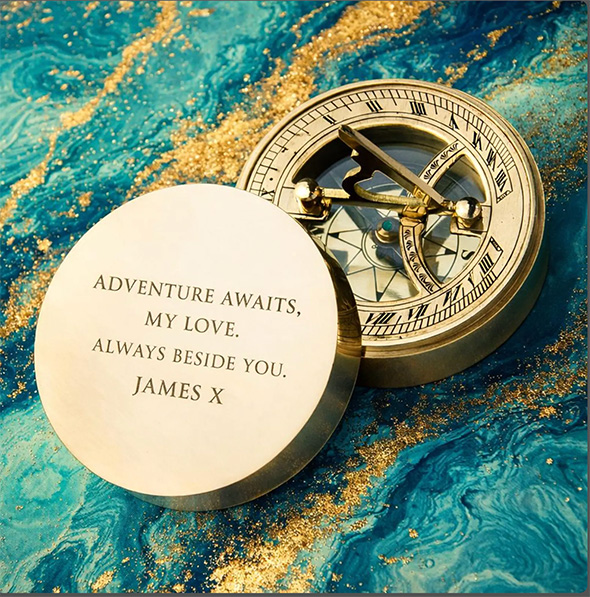
The Khartoum Compass
Solid brass, working sundial-compass, hinged lid. Engraved on the inner face with up to four lines — a name, a date, a line from the woman who told him he could.
See this piece →Every man we make a piece for has had this evening. The evening the map runs out. The evening the decision becomes irrevocable not because he made it but because the river kept moving. The evening he must, alone, open the compass on his knee and choose south.
We engrave for that evening. We engrave the line his wife said, or the date his daughter was born, or his father's name, into the brass — so that when the river is dark and the boatman is silent, the man we made it for can open the lid and remember that he is not, in fact, alone in the boat.
See the pieces
View the Collection → ← Chapter IFor the man at the tiller.
If you know a man who is, quietly, somewhere south of the map — leave your name. We'll write to you when the first compasses are ready.
Thank you.
Your letter is on the list. We'll be in touch when the first pieces are ready.